Thursday, February 23, 2012

An Invitation To Fundraising Gala on May 4, 2012 for the benefit of Good Samaritan Women Center

Peace!

Nine years since establishment of Good Samaritan Women Center in Taichung City, our services to the needs of homeless women continue to expand.  Presently, our center, located walking distance from the back of train station is an old rented apartment that we renovated in June 2003 after it was unoccupied since 921 Earthquake of 1999.    At present, our center can shelter about ten (10) women.  The landlord have been good to us all these years, however, our needs continue to grow, present space limits our activities. The cracking walls from the earthquake posed constant danger to the staff and the women.

We have been discussing and planning for three years about the possibility of establishing a place of our own.  Now, I am very happy to invite you to help us make this dream home for Good Samaritan Women Center come true.  On May 4th, 2012, Friday, 6:00 PM, a Gala Fundraising Event will be held at the National Hotel in Taichung, Zhong Gang Road to inaugurate our 3-year fundraising plan.  Please help buy a dinner ticket.  Ticket costs NT$2,000.  Please consider this as your contribution to the new women center. 

Give a gift of home ~ a safe place for healing and reconciliation.  Be our partner in helping women who have found themselves homeless to rebuild their lives and future.  Thank you for buying dinner tickets!  Please contact us.

With deep gratitude, 

Sr. Marvie L. Misolas, MM
Founder and former Director
Good Samaritan Women Center

Friday, January 6, 2012

WHO IS MY NEIGHBOR ?

A Story of faith in action in Taiwan---- Catholics, members of SSVP and friends of other faith traditions gathered to organize the Good Samaritan Women Concerns Association to support the Good Samaritan Women Center for homeless women

This is OUR STORY…

We are encouraged to let our expressions and feelings out…

This is my story…please listen.

Only then, you might understand who I am.

We invite others to share the richness of our faith…in Jesus

We share communion in sharing our hopes and brokenness


Thursday, December 1, 2011

Touching Our Fears and Hopes – An Advent Reflection


December 1st, I was to facilitate the weekly meeting with the women and staff. Somehow, I woke up in very early in the morning to plan on the activity and remembered it was World AIDS Day, so I planned the activity focused on HIV-AIDS. Towards noon, Fr. Larry Barnett, a Columban priest friend, paid us a surprise visit and brought a huge box of freshly picked persimmons from the mountains where he worked with the Taiwan Taya Tribe. He joined us for lunch and the women just loved him talking in Taiwanese with them.


At the meeting, we had a big group of 12 women including the staff. Surprisingly, most of them did not remember December 1st as World AIDS Day. After introducing the theme, we watched a DVD, “Hug With Love”, an HIV-AIDS documentary produced by the Department of Health. It was a well presented documentary of HIV-AIDS in Taiwan and it was all in Chinese, interviewing local person affected with HIV-AIDS. The group was so focused on the presentation however the seriousness of the issue was evident to the silence afterwards. Afterwards, I asked everyone to make an AIDS ribbon, and each light a candle to pray for someone they know who are suffering of the disease or supporting and advocating the HIV-AIDS pandemic. Each one has a choice to put on the ribbon or lay them around the Advent Wreath made of fresh pine leaves and branches, to signify our solidarity in our own FEARS and the fears of those who have AIDS, to connect our own HOPE with those who are dying of AIDS. After everyone lighted her candle, we all gathered around and formed a circle hug acknowledging each others’ presence and support. This was followed by each of the women sharing how their week at the center was like.

Through our gestures and silence, touching the meaning of Advent with our fears and hopes as those suffering from HIV-AIDS made me realized the depth and meaning of Advent. For the most of the women, they may not know fully what Advent is, but they understood that it is about hoping. Finding within themselves the seed of hope and change, in the midst of their struggle to rebuild their lives, to form friendships with one another and eventually, in their own phase find their rebirth. It is in these moments, Jesus’ birth find its meaning to those whose hearts are changed.

Thursday, June 9, 2011

A Creative and Wise Giving - Learning from our Buddhist Friends


This morning, I drove the car to pick up our weekly vegetable donations. When I arrived, it was a little early and the vegetables were not ready. Mrs. Liao [陳瑺玲] kept on apologizing and told me she is waiting for her husband, Mr. Liao[廖學正]. He said he forgot to prepare our vegetable because today there were about three organizations who also came to get vegetable donations. Not too long, Mr. Liao came, hurrying and apologizing that he was not ready with the vegetables. He started to pick up different kinds of vegetables, weighed and listed them. As I was waiting, me and Mrs. Liao helped bagged the vegetables. When he finished, I had four huge bags filled with different vegetables to take back to the center. While waiting, I told Mr. Liao that I am very grateful for the help they give us.
Mr. and Mrs. Liao are very devout Buddhists and were introduced to us by Mr. Wu [吳平常]。They have been donating fresh vegetables to us for more than four years now.
I asked if I could take a photo of both of them and they happily said yes. Mr. Liao explained to me that they are a small group of individuals who want to help homeless people by contributing a small amount of money to buy vegetables for donation. He showed me the names of the contributors. I was so impressed how they thought of contributing this way. The donors put together money and give it to Mr. &Mrs. Liao to give the equivalent vegetables to the organizations helping homeless people. They are not only helping the homeless but also helping Mr. and Mrs. Liao to continue with their small business by giving them regular sales. The donated vegetables are weighed and listed for record and they report the donation to the original money donors. What a wise way of giving to the society. Helping the homeless and the small business people in a very responsible way.

Monday, April 18, 2011

Creating A Safe Space for Healing and Reconciliation

Poverty and homelessness among women and men is a global issue we all are facing, here in Taiwan and in our respective countries. Last year, the 10% rise on the number of domestic violence in Taiwan households reflects the increasing number of women and children who are seeking shelter. (The China Post, June 9, 2009). Also in 2009, violence and difficult family situation accounts for 91% of the causes of homelessness among the clients at Good Samaritan Women Center. High rate of unemployment for women who are over 40s and low skilled put them in the high risk of being homeless.

Since 2003, the women center offers a safe space for street and homeless women through its day shelter and temporary residency program for free. However, Good Samaritan Women Center works of mercy do not stop there, the organization has been in the forefront since the beginning in its advocacy for the rights of homeless people and its service provider organizations. Networking with other homeless service provider, the Samaritan Center organizes annual symposium on homelessness lobbying for the establishment of National Taiwan Homeless Services Act. The organization also advocates on the issue of women’s rights especially in the social welfare system. Three times a year the center organizes seminars on current issues affecting women.

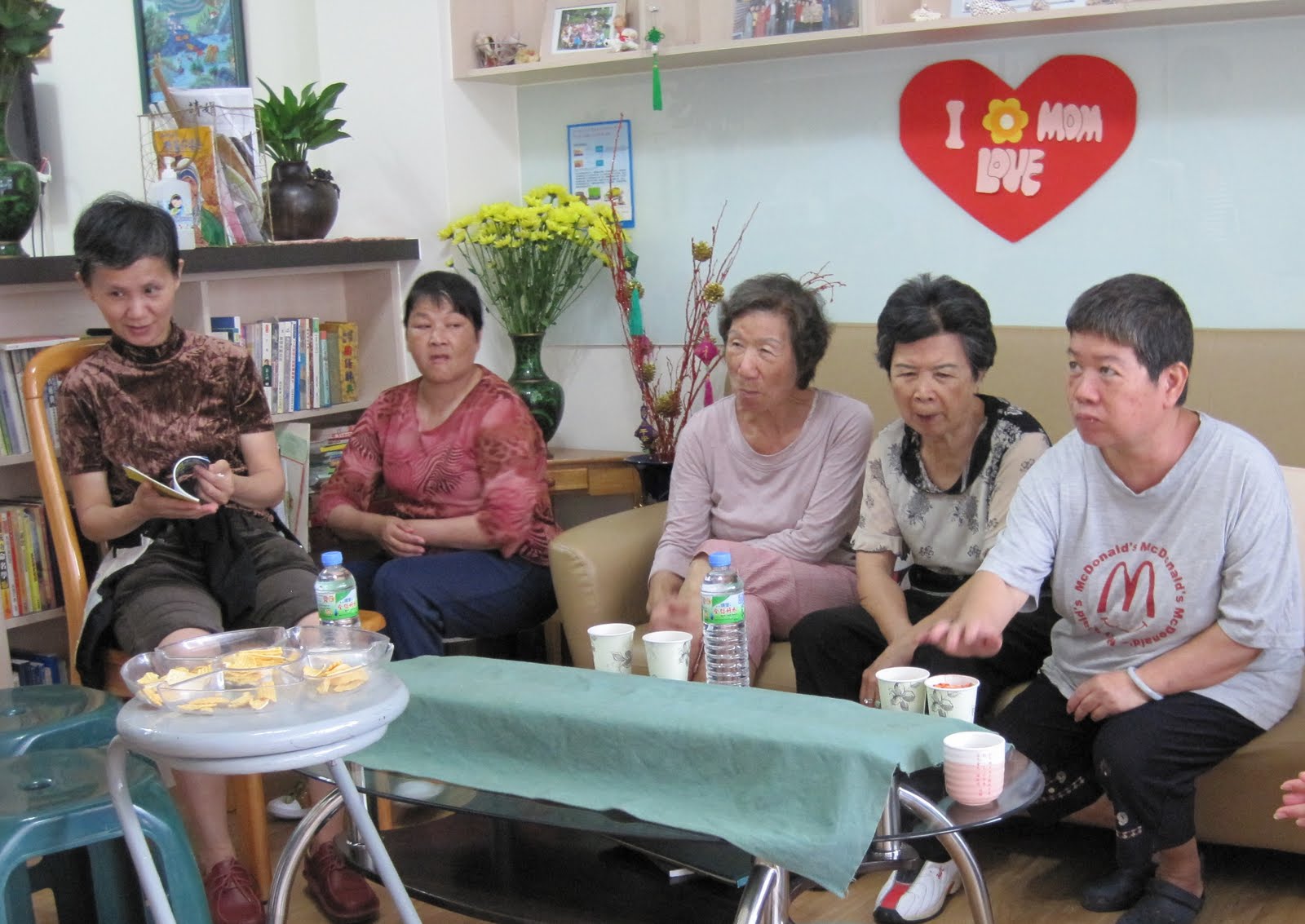
Most days, a woman comes by herself at the center, seeking a place to live. Some women are referred to by domestic abuse center, hospital, police stations and local government social welfare service. Each day, a number of street women come asking for clothing, hot meals, warm shower, wash their laundry or just to stop by and be listened to, rest and watch television. At the Samaritan Center they have a home where they can laugh, talk, cry and tell their stories. It provides shelter for the street women from the hot sun and bitter cold winter months. Here they have home, restful and away from the streets and measuring eyes of the public.


The works of Good Samaritan Center to help individual women rebuild their lives need to expand for it to serve women more effectively. Currently, the women center rents three floors of an apartment, allowing 10-12 women to live in a given period. As more women come back to visit, the place is now very limited and there is not enough space to interact. This also limits extending temporary residency period for any women who needs more time to find work and rebuild her life.

Our hope is to buy a newly built house around the vicinity of Taichung City, where transportation is an easy access. We would like to start an eco-friendly women center which will be a model organization in Taichung City. In addition to this, we need to build our capital fund to increase our financial security to make sure that we continue delivering basic services to homeless women who come to our door. We thank you for your help.

Thursday, November 18, 2010

Lim Sim Ek (A Friend and Teacher - Che Guang Buddhist Library


Old man by the willow tree,

You rested your back on the cold bench,

Your face, lined with dark creases.

You told the night quietly your struggles.

Its soft breeze touched your forehead and kissed you with swift comfort.

Thus momentarily, the tired body finds rest.

It was heaven for you.

You avoided my smile, you fear I will know who you really are.

I wanted to ask you, but I'd rather not.

I wanted to ask you, how is life?

Does it really matter?

I was deep into these questions,

Suddenly you interrupted my thoughts,

You chuckled and gave me a welcoming smile!

Homelessnes


A Pastoral Review

The familiarity of the course - Spirituality, Sexuality and the Body, ignited some precious and difficult memories that have touched my life. As I engaged myself with the materials and shared experiences of my teachers and classmates, I found myself haggling with‘homelessness’, maybe because of my life as a missioner and because of the fact that I worked with homeless people. Reflecting on the course materials, the term homelessness puts on a new quest and is thirsting for understanding in the light of intimacy or the lack of it in a human person…


“All the lonely people, where do they all come from?” a quote Ferder and Heagle borrowed from The Beatles began their Chapter 8: Longing for Intimacy. “Is there enough love?” the authors quoted young woman who cannot reconcile her experience of intimacy and love in her family and what she witness around her. And how can we not have this kind of awareness and further ask questions, like: “Is there enough love in my life to keep me going from day to day? Is there enough connection so that I don’t feel isolated and alone? Is there enough understanding, enough compassion to find meaning? How can I heal from the betrayals of love and the collapse of trust? [Ferder and Heagle p. 45]. And how can we not feel “not being at home” with what is going on around our lives. In working with women and men who have found refuge in the streets, the primary issue of homelessness, is not only much that of a lack of physical home but the aloneness and isolation from their “home’, whether this home is the self, family and friends and the society. The term ‘disaffiliation’ of a person maybe applicable to understand this particular dehumanizing experience of homelessness. This is the psychological homelessness. Over prolonged period of being in this situation this feeling of being alive and belongingness dies. The dignity and hunger for living slowly vanishes into the dirt and invisibility that one feels. This spark in the human capacity for living and authentic intimacy needs to be nurtured once more and “be brought home again”.

The helping task required of us staff and volunteers at Good Samaritan Women Center entail the intimate compassion as that of the Good Samaritan in the story.

Being present and facilitate trust and safe environment is our immediate response just as food, shower and clothing restore the physical well-being of some of our friends. And as for me, is an exercise of trust to myself that I can love the stranger and to test my patience when it is being stretched. Our service requires ‘side by side intimacy’ and ‘back to back intimacy’ [p. 151-153]. It is important to become a friend and the assurance of being with them until one find themselves ready to be in relationship. It is the assurance of being with them in the unfolding task of reclaiming one’s ability to be in relationship. It is a journey of celebrating togetherness in being both blessed and broken.


Coming and going by bus to the class, I am both thankful and sad. Thankful to be experiencing a beautiful city of Chicago with manicured public lawns and well-kept renaissance façade of buildings and many beautiful people around me. And sad, when my bus at certain stops gave me chance ‘to see’ our sisters and brothers in the street, still curling in the morning cold in places where they found homage of the night.

In Chapter 31, the authors talked about shaping a theology of compassion. They suggest that the process of encouraging, healing and ministering to the community in the practice of Gospel vision is called pastoral theology. “Pastoral Ministry begins by accepting people where they are and listening respectfully to their stories, just as Jesus and the woman at the well…It is a presence to be offered. The first task is to offer a safe setting.” [Ferder & Heagle, p. 213]

I suggest for myself and for my reflection that the Spirituality of Intimacy and Sexuality reclaimed from the Gospel/Jesus example, is the basis for Pastoral Theology. The awareness of such, evokes us ‘to see’ and ‘to act’ and humbly return to ourselves, experiencing God’s love.


June 8, 2007
Tender Fires: The Spiritual Promise of Sexuality by Fran Ferder and John Heagle. Crossroad Publishing Co., New York, 2002


for Professors Jim and Evelyn Whitehead

Sunday, October 17, 2010


The Practice of Compassion in Taiwan

So many foreign visitors in Taiwan are in awe of their experience of kindness and hospitality of the people. As a missioner living in Taiwan for 12 years now, here are some examples of this compassion…

A client’s story: She was sleeping for three days in the park. It was pouring rain, suddenly a young woman came to give her a new umbrella and some bread. Another woman helped her make some money for food, by letting her help distribute ad materials from the woman’s work. That was how she endured living for two months in the park.

I remembered when my friends and I were starting to help homeless men and women, we distribute box lunches openly in one of the parks. Several times, after we finished distributing food, there were individuals who would come up to us and donate money for the next food distribution. Some fruit vendors also began to bring their fruits for us to distribute to the homeless people for free.

One day, a woman came did not even want us to let us know her name dropped off a huge bag of vegetable in front of the center. She still comes occasionally.

A Buddhist friend helped the women center find a sponsor from the market. This family sells fresh vegetables and fruits. They give us all kinds of fresh vegetables every week, enough for our weekly consumption at the women center. They do not give us old vegetables.

When Good Samaritan Center started in 2003, we could not afford to buy new furniture and fixtures. Words spread and so many people cleaned up their homes and brought all kinds of stuff that we can use at the center. These goods such as water heaters, blankets, tables, chairs, among many things, were still good and usable.

A woman neighbor who lives next door to the women center, one day came to me while I was watering the plants in front of the center. She said, “Sister, I will give you two baby plants I planted for you. One day you told me you liked this flower very much.” It was a red hibiscus plants. I almost cried when I looked at her, she is not even a Christian, she barely knew me and yet she took so much effort to give me this gift. Now, I have the plants in my apartment’s little garden --- blooming!

Tuesday, August 3, 2010

Learning the Arts of Communication


Many of the clients who came to the center these past two years are homeless women who left their families because of difficult family relationships, many have experienced domestic violence. Last year alone, 91% of the cause of homelessness is due to family problems. To address this situation we planned to hold series of seminars that will address this issue. On July 24th, we invited a professional family counselor from Taichung County Center for Family Education, Prof. Yao Xiu Ching (姚秀情) to give us a workshop on Effective Human Communications. Seventy participants from different organizations signed up to attend the workshop. They told us that this theme is vital to their work and ministry. Prof. Yao gave an excellent presentation on the arts of communications. The atmosphere of the day was very animated and participative. She gave us basic exercises to illustrate different ways of communicating and offered techniques on how to develop good bargaining skills. She used different cartoons and life examples to illustrate how human beings communicate. She had every one of us try is to talk with a partner in three different positions: one standing, other sitting; talking back to back and talking facing each other. Professor Yao also helped us practiced talking and listening to each other, alternately. We were able to observe ways and become aware how the other person reacts to our own voice, tone and expressions. The key point in her talk is about self-preservation. In communicating, all human beings desire three things: to love and be loved, to be affirmed and to be listened. Our level of communicating depends on how much we protect these three and how safe we feel to go deep.

Monday, May 10, 2010

Calling Our Mothers' Presence


Calling Our Mothers’ Presence

We gathered in circle to say a short prayer to begin our celebration for mothers’ day. I asked everyone to mention each mother’s name loudly, summoning their presence with us at the gathering. I was struck how many of the women were surprised, could not say right away their mothers’ name. Some choked to tears and for some it brought beautiful smiles. We sang together a mother’s day song and prayed for all our mothers. I asked everyone in the room to give a hug to those present who are mothers themselves. The room was filled with laughter and emotions as we greeted each other a happy mothers’ day.

The sumptuous aroma of freshly prepared food from the kitchen brought memories of home and our mothers’ cooking. We all enjoyed and thanked those who prepared it. Suddenly, one of the women left without notice which made us staff worried because of our responsibility to the rehabilitation center where she came from. The happy mood was changed to worry and panic as the Good Samaritan staff tried to find her around the area. One of us spotted her taking a taxi. We went back to the party, feeling disappointed and worried, but we could not do anything but wait for news, until it is time to report her disappearance to the police after 24 hours. About an hour later, the rehabilitation center’s social worker called to tell us she arrived in a taxi. We were all relieved!

The Wellness activity in the afternoon continued. While waiting for the teacher, we painted each others nails. The facial spa teacher came and chose me to be the model, asking everyone to touch my spa pampered face! Then everyone tried to do facial spa on their own! It was truly a women’s day!

Of course, before we said goodbye, we were served “Tiramisu” for Mothers’ Day cake and gave away “red and pink carnations” to the real mothers, and red roses to the misses! We had a father and son guest, so they were also given three red roses for the family’s mom!

Friday, March 19, 2010

Greetings from Norway


Greetings from Norway

We are six Norwegian girls who are very devoted to the thought of helping others overcoming their problems and personal struggles. As part of our Bachelor Program in Social Work, we went to visit Taiwan to learn about social work and how it can be performed in another culture.

We chose to visit Taiwan because we found the thought of this highly developed country with a rising welfare state intriguing, which none of us really knew much about beforehand. After many hours of online research, we were delighted to find an organisation called Good Samaritan. For us, the name of the organisation symbolizes the positive values optimism and friendliness. We sent an email to Sister Marvie where we explained our mission, and that we would appreciate if we somehow would be able to visit this organisation to learn about their work. We arrived in mid-January and stayed in Taiwan for five weeks.

Being in Taiwan, we realised how similar the social problems here are to those we see in Norway. The most striking similarity is the focus on unemployment, the need of having a steady job to go to each day. The Norwegian state has many programs meant for people who are unemployed, and we see that this is also something the Taiwanese government work to implement. Homelessness is common in Norway too. Even though the similarities are there, we realise the causes for the problems may not be the same. And different causes demands different solutions. In Norway the government have the primary responsibility to make sure that people maintain an acceptable livelihood, as in Taiwan they have a different approach. We applaud the voluntary work in Taiwan. It touches our hearts to see how the Taiwanese people are willing to donate both their time and money to help those in need.

One thing that really struck us about Taiwanese culture is the friendliness and openness that met us wherever we went. This is perhaps the most striking difference if we are to compare Taiwanese and Norwegian culture. We met people who were willing to help us with everything we needed, and we always felt welcome. This of course also includes Sister Marvie and everyone at Good Samaritan. Without them, we suspect that we would not have learned anywhere near as much as we did. Always willing to help us, whether it was guiding us around Taichung city, or helping us get in contact with other resourceful people.

During our stay, we were able to observe how Good Samaritan work to help homeless women. We joined them on their tours around town to hand out food, water and blankets, and saw the joy this brings. Also for the women who use the center, we saw that the Good Samaritan is a place of warmth and respect where people always work hard to make everyone feel like part of the community. They share stories, some of them similar to each other, and find strength in the bonds they have with each other. Everyone is treated equally, yet everyone is always free to be themselves and grow in their own pace.

We find the work Good Samaritan important. Being able to observe how much of an impact the center has on the lives of the people in the community is impressive.

One important thing we learned is this: one does not need to speak the same language to communicate. We will always remember the nights where we sat with the women at the center, watching films, sharing meals, and playing cards. Even though we did not understand much of the words, we still felt like we were able to communicate well. One does not need a common language to understand the meaning of a smile.

We would like to thank everyone at Good Samaritan Center for their time, and for making our stay in Taiwan an unforgettable experience.

Best wishes,

Aase, Ailin, Grete, Maren, Odrun and Rebeca

Saturday, February 13, 2010

A New Year Homecoming


A New Year Homecoming
February 12, 2010

The annual tradition of Lunar New Year homecoming for all the women here at the Good Samaritan Center gives a glimpse of a what could be what Jesus envisioned about a party. I was reminded of what He said, “when you give a feast invite those who are found in the streets ---the lame, the blind, the handicapped, the lepers …and so forth.”

In front of the center is a little garden, greeting everyone is a profusion of colors from the blooming flowers as if alerting us of the new spring, and of the hope that lies in the new year of the Tiger! As soon as we opened the doors, some of the women came in early, bright and chirpy like our pet birds! We quickly set up the tables outside, arranged the chairs, put the ‘hor d’oeurves’ (consist of pumpkin and sunflower seeds, mix nuts and rice cookies) and hot tea and juice drinks on the tables. The women came in their best, even if their best is a dirty looking sweater. As soon as they found their spot in one of the chairs, the party began for each of them. Chatting and eating away. Towards half of the morning, we could not hear each other because of the loud voice that is trying to outdo each other telling their adventures and plans for the holidays. Yet, some, seemed comfy in their little corner avoid conversations. Still, everybody is polite and happy to greet each other a greeting for the new year.

Some of our residents were busy helping prepare the food upstairs. One by one, the trays of vegetables and other ingredients for the ‘huo-guo’(hotpot – a mixture of everything in a boiling soup) are being brought down to the buffet table. Then more women came, including two former residents now living in a rehab center picked up by our social workers. A huge van parked in front of the center bringing three more former clients who now live in a supervised living facilities came. One came being pushed in a wheelchair by one of our volunteers. One woman came in drunk and looking pretty dirty, so we asked her to clean up and shower to feel better.
We started with the activities, beginning with Chinese calligraphy contest. All the women were asked to write ‘New Year blessings’ on red rolls of paper to make ‘chun lien’, or spring door greetings. One of the women amazed us as she sat down, poised like a skilled calligrapher and started to write a classical greeting. She was so focused writing as if she were another person. We all remarked how good she was. After she finished, she told me with pride in her eyes, “Sister, people took me as stupid (but I am not)!” She won the contest. Then, our Korean volunteer brought two Korean dresses for the women to try on. This was a hit! Everyone wanted to try it and take a picture. It was a lot of fun and gave the women a sense of beauty. Just before we finished setting the long table, we invited everyone to a prayer honoring the ancestors. It is a Chinese New Year tradition that is delegated to only the oldest males in the family. We changed it a little bit, so that all the women will have chance to bow in reverence and thanksgiving to God and their ancestors. Each woman offered incense and we all bowed down in front of the Cross and the altar with our surnames written on it and we finished off with a prayer holding our hands in a circle.
And so the table feast begins! Everyone enjoyed the tastes and smell of the parade of food freshly prepared and cooked upstairs in our kitchen.
After everyone quieted down with bellies full, we asked everyone to sing a lively traditional New Year song to greet each other. We could feel the excitement in the air, as we asked everyone to sit down and we will give the red envelopes. They all shouted happy New Year and clapped. Then we sang again and again. Everyone helped cleaned up. We said goodbye as we greeted each other once again.

Wednesday, December 9, 2009

New Challenges for Homeless People: Election Induced Enforcement


New Challenges for Homeless People: Election Induced Enforcement


It was almost 9:30 p.m. yet we were still preparing the boxed noodles, soup and oranges. We are going to distribute them during our outreach that night. The temperature had drastically dropped and the wind added to the bitter cold.

When we finally took to the streets, it was past 10 p.m., we were a bit late than usual. We decided to go Tungkuang Road Park on the east, however, there was not a single homeless person. Next destination was the Tzu-you park, amazingly, it was clear of the usual people we serve at night. We went to the Taichung Park, we saw a group of men and a woman, when we approached them, the group was not very friendly. I have seen the women hanging around the park few days ago. We walked inside the Taichung Park and its vicinity, again, there was no one around, by this time we begin to wonder where were the homeless folks who used to rest in those areas gone. We went to the Taichung Station, walked around checking, again, there was not a single soul. Instead, a policeman approached us, asking who we were looking for. We told him that we are visiting some clients who sleep inside the station. He said, “There is no more homeless people here”. We asked, “Why not? Where are they?” He said, “They are not allowed around the Station and main thoroughfare, Mayor Hu, have given us orders to clean up the Station of the homeless people, they look dirty and pedestrians/passersby are afraid of them.” So, that explained the absence of all the homeless people in the vicinity. After realizing this situation, we started to think where they might be. Thus, we went out of the central area, and there we found most of the folks, sleeping out in the cold. We found most of them towards the northern section near the railroad tracks. We spotted a middle-aged man sleeping in one of the bench at Tungkuang Park, we gave him some food and sleeping bag. He was drunk, he barely responded to us. While we were talking to him, a group of policemen stopped by and came to check on us. They immediately asked the man to get out of the park, even he could not stand. One of the police officer told him to go to the Men’s temporary shelter in Da-kong Street. I asked the police officer if he knows whether the shelter is open at that hour and will accept the man. He said he does not know for sure. The police said they want the street sleepers to go to the shelter because they could die of cold.

It was already past midnight, so we decided to end our night outreach. I wondered where that man went to sleep, after the police asked him to leave the park.

Although, it is true that some homeless men are drinking around the area of train and bus stations, it is not true of all the homeless population. The well-lighted train and bus stations are places of safety for them, from cold and other hate crimes against homeless. Homelessness is a delicate public issue. Election is coming and politicians will use them to measure how the incumbent government served its population. Mayor Hu of Taichung City has done so much to ease the suffering of homeless people in Taichung by encouraging homeless service providers to exchange views and experience through Social Welfare Department meetings. We hope that he will continue to support them and their service providers and not crackdown on homeless.

December 3, 2009


Thursday, November 5, 2009

Outing in Tao-Mi and Nantou Mountains


Outing in Tao-Mi Village and Nan-Tou Mountains

The staff and Board members of Good Samaritan Women Concerns Association had a weekend outing in Nan-Tou county. We arrived at Sun Moon Lake just before 3 p.m. and decided to take a boat ride around the lake. Our boat docked at various tourist spots inside and around the lake. Our first stop was a floating garden, of what used to be a small island in the middle of Sun Moon Lake but submerged during the 921 earthquake 10 years ago. The floating boardwalk and planters provided a 360 degree angle to see the surrounding hill around the lake. The next stop was the Suen Kuang Temple, from the dock we climb uphill for about 15-20 minutes to reach the temple. There were so many tourists from China, eager to take pictures and pay respect to the statues at the temple. From the temple, we went to the aborigines’ village. There was a group of aborigines, belonging to Taya tribe singing. One of them invited me to dance and some in our group also joined in. It was so much fun to dance with aborigine dancers and their music. We walked around and bought some food like grilled sausage, a beverage with rice wine, sliced guava and fried little fishes from the lake. We came back to the port just in time to go to our destination for the night. We rented a private bed and breakfast place in Tao-Mi, Puli district. We got there just before dark. The owner Mr. Liu, welcomed and showed us our rooms. The rooms are built next to the owner’s house, has a rustic flavor to it. The rooms resembled a Japanese style accommodations with wooden floors, the beds are thin foam sprawled on the wooden floor. At the back of the main house, is a huge refectory where they serve the meals for their guests. That night, we enjoyed a sumptuous meal prepared by Mrs. Liu. After dinner, Mr. Liu invited us to go frog watching at around 7 pm. Before going to the river he took us to the famous “Paper Church” or “Paper Dome”. A beautifully engineered open building made of paper columns. It was impressive. The design and paper columns were a donation from Japan, to commemorate the 921 earthquake. After the 921 earthquake, the residents of this little village Tao-Mi did not have much left and rehabilitation was needed. The New Homeland Foundation in cooperation with the government trained the residence of this village into eco-tourism. Tao-Mi is home to Taiwan swamplands. The village changed their mindset into environmentally concerned citizens. Each year, the residents have two training on how to be eco-tour guides. We went down to the river wearing our rubber booths and flashlights looking for different kinds of frogs. Later that night, after we came back, Mr. Liu prepared tea for our group. The theme of the whole village is frog. Even the restrooms are designed like sitting frogs!

The next day, we were served a hearty breakfast after everyone came back from morning walk in the surrounding villages. We had a short morning prayer together. Just before 9 am, we all left the Tao-mi and went into the walking trail in the swampland area. All 7 of us tried the pulling trolley that takes us to the other side of the swamp filled with lilies…it was a great idea! Afterwards, we drove around the valley and mountain roads until we reached the top of the Second Mountain of 9 Mountains. On top of this mountain is a one-story house tipped into a sliding position by the 921 earthquake. Apparently, the mountain which was 2 km away from the house became their backyard after it moved forward to where the house is. This
place was the memorial site of the 921 earthquake. Further up, we went to the place where they called “mountain explosion”.
The entire side of the mountain rolled down to the valleys. It was quite, very few onlookers were there. Truly, it was a powerful reminder of the continuing movement and change of earth’s surface which is catastrophic to those who inhabit the mountainside. The residents had a change of heart, they know they have to live harmoniously with their environment.
We went home and enjoyed “huo-guo” for lunch at Kao A-yi’s restaurant. Nowadays, the little bamboo plant from Tao-mi is beginning to adopt in our little garden in front of the center.

Wednesday, October 7, 2009

Mid-Autumn Moon Festival Celebration

Taiwan Jia You! (Taiwan Rise Up!) The balloons with our PEACE PRAYER went up to the sky.
Peace is the theme of our Mid-Autumn Moon Festival Celebration this year. We asked the women to remember the flood victims in southern Taiwan. They wrote the prayer in a dove shaped paper and tied it up to the balloons. Around 20 women showed up to participate. We had Karaoke singing contest and barbecue. Some men who are friends of the women also came and they assigned themselves to the barbecue pit! Soon as we put the food out, everybody grab their barbecue sticks and put it in the fire! Everyone went home so happy taking “yue bing” (moon cakes) and pomelo.
After the party, the moon was shining so intense in the peaceful and calm sky. 2 October 2009

Tuesday, September 29, 2009

Long Road to Home ---Story of A-lu


Long Road to Home --- Story of A-lu
(the name/s of the persons involved were changed to protect their identity)

Finding A-lu

In 2003, one day during an outreach, I and the social worker went inside an old compound. The place used to be a flea market. Under a huge tree, a dilapidated sofa lay a person, her filthy hair tangled in grease and dust. Upon talking to her, we found out she is a woman. She can only utter a phrase, “Wo bu zi dao!” (I don’t know!). We offered her boxed lunch and a drink which she accepted and immediately left us. There were men around, selling their second hand wares, so we asked them if they know her. The men told us her name is “A-lu.” From then on, we visited and followed up on her case for about two years.

Helping A-lu

A-lu became very familiar with us and eventually began trust us. One day she came with us to the center. Took a bath, and I gave her a haircut, off with the grease and dirty tangled hair. The social worker immediately made appointment with the Taichung Hospital Mental Health Department. A-lu was admitted for treatment for a month. The process of searching her identity began. Our center, the hospital and the Taichung government worked together on her identity and eventually. We found her relatives.

Finding Her Relatives

She has a son adopted by an old soldier who earned living selling old books and magazine in another flea market. The two lived in a roach infested place filled with very old books and magazine. Tragedy struck one day, the book place burned down, and the son had no place to go. We took the son temporarily at the center, allowed him to live in the basement, until the Taichung City child welfare department found a place for him. Meanwhile, A-lu’s daughter’s information was also found. The daughter lives in a Catholic-run institution for the mentally handicapped. Her story eventually became clear to us through the son. He was able to tell us what he could remember about her mother when he was very young. His memory of A-lu goes back to when he was about three years old. Her mental condition began early, and her daughter was taken into custody by the city government. A-lu and the son, lived with the old soldier, until one day she had a terrible car accident which made her mental condition worse and she ended up wandering in the streets until we found her. The son grew up with the old soldier but never attended school, by this time he was already 15 years old. His case was taken over by the Taichung City child welfare department and put him to school to finish primary. He is now in junior middle school.

Reconciliation

Finding A-lu and her family was a beautiful story of reunion and reconciliation. A-lu now lives in a supervised facility for people with mental disability, for life. Her son also lives in a supervised facility for young people until he can find work and a place of his own. He hopes to study social work someday. On special occasion, we invite the whole family for get-together and to be reunited. Many other stories of reconciliation are waiting to be told at Good Samaritan Women Center.

September 25, 2009

Sunday, September 20, 2009

PEITA - A Mother's Sorrow

PIETA – A Mother’s Sorrow

September 17th Thursday, very early in the morning we received a call that one of our resident woman’s daughter died in a car accident in Chungli, a city in the north. Three of us staff sat down with her and gave the news. We witnessed a string of tragedy in one person’s life. Later that morning, I along with two Taichung county social welfare officials, accompanied her to the police station to know more of the details and file the police report. She was crying all the time. After police report was taken, we were asked to wait at the lobby. I witnessed how the Taiwanese people deal with tragedy.
A woman we saw coming in to the police station approached her this time, along with two teen aged girls. The woman is the Director of the children village where her daughter was temporarily living in custody after the two of them was found living in the streets for about a week. She was brought to Good Samaritan Women Center. The Director along with two girls and made a low bow saying sorry “tui bu chi” to her. She sobbed even more. Then there was quiet and calm for a long time.
We moved to another corner of the lobby to wait for the investigator. We sat there for quite a while she cried non-stop. All of a sudden, two men came up to us. It was the driver of the 16 wheeler-truck who killed the daughter. He was inside the interrogation room. He was allowed to come out to kneel in front of the mother. He was crying asking for forgiveness. She sobbed with so much grief when he saw him. We were all feeling the deep sadness. All I could do was held her hand and offered her water to drink. The driver and the mother exchanged some questions and answers. Later on, she asked him to stand up and uttered a forgiving word, “stand up, being mad at you will not help, my daughter is already dead.” I looked at her with admiration, she is a woman with a lot of inner strength.
The investigator was taking a long time to arrive, so we decided to go ahead and went to the morgue. We waited in a smaller investigation room next to the coroner’s room. She was to identify the daughter’s body in the presence of investigator. All but me, were telling her not to see the daughter’s body until she prepared and made up. The others doesn’t even realize what they are saying. All the talking and suggestions from others in the room made her confused. The point is we were there to identify the body, so she has no choice but to look at the mangled little body of her daughter, no matter how hard this will be. It was past 8 p.m. when the investigators came, she and I were the only ones allowed to get inside the morgue. When we all gathered, the police opened the body bag. I held the mother as she sobbed in muffled sounds. Everyone stood still, waiting for her to calm down. The police asked one question, “Is she your daughter?” and she responded positively. Then the investigation process began. It took about two hours questioning all the parties.
Since it was too late to go back to Taichung, we decided to stay with the children’s village. That night, all the children in the orphanage hugged her and told her how her daughter was before the accident. She was very calm during this time. I stayed overnight also to be with her. The next day, I went back to the women center, and she decided she liked to stay behind and rest. The director promised me that they will watch and support her. As of this writing, she was still at the children village, wants to stay near her daughter’s remains and arranged the funeral. She chose to have a Christian funeral for her daughter, even though she is a Buddhist. We await for her return at the women center.

Tuesday, September 15, 2009

A Day at the Women Center

A Day at the Women Center - September 15, 2009

When I arrived this morning, everyone has arrived, we said good morning. I haven't put my bag down, I noticed a new woman came down from second floor. Su-u came down with bread. She welcomed me with a big hug. I commented on her red lipstick and she looked good. She said she missed me. Su-u used to live with us, but now she has her small apartment on top of the restaurant she works for. She often visits back. Weiyin, the social worker, got my attention that we have a new woman who came yesterday. Then A-ngo came down rushing, her hair rumpled and she seemed disoriented. I asked how is she, but she doesn't seem to comprehend. Fangxue, briefed me that she took her to the hospital last night, upon checking her with 40 degrees fever. Luckily, she is free from the HIN1 virus. She took the morning medication, I asked Fangxue to take her to the 4th floor to rest and be isolated from other women. Meijing, our Korean lay missioner volunteer was already busy cleaning around. Another resident was busy calling a prospective employer for interview. Lucky, the dog, was lying under my office table.

I prepared the drinks for the morning outreach. Fangxue came down with 4 'piandangs' (box lunches), and some day fresh bread. We both left on our motorcycle to visit and take food to the women in the park and around trainand bus stations. We parked at First Square, and saw 2 homeless men sitting in on of the bench, filthy, already drinking 'gin'. I started a conversation with them, and asked if they saw Shuzhong, one of the women we regularly visits. They said she hasn't showed up. We went to the train station, we did not find a single woman, but talked to two groups of homeless. A couple, the husbad is eating noodle, he sits in front of the train station in one of the posts, while the woman stood around him not too far away. They all sleep inside the train station. We gave a box to one of the eldely who earns his leaving collecting recylables.

We drove to the Taichung Park and met four homeless women. We talk with them for a little while. We distributed all the food so we decided to go home. It was already 11 a.m. and the sun is so hot.

We came back to the center, A-yi was there, she used to live at the center but left without saying goodbye. Now she wants to come back. She went out to smoke. Then lunch was served. After lunch, everyone seemed to find a little corner to rest. They will come down later to the cool first floor to sit down and talk with each other. Another woman came up just when we were finishing the dishes, A-chiu, huge, one-eyed, filthy and doesn't wear slippers! She gave me a big hug! Asked where was I. She ate by herself. She promised me to take a shower afterwards!

Meanwhile, I have to do some office work. Weiyin is asking me about the budgets. I barely finished my first paper work, Rick Hsih came, he is a reformed alcoholic and very active with AA and Alanon. He came for a visit. Meijing and I sat with him and asked about the details of the women seminar on alcoholism held last August 21st. He and I planned the workshop before I left for the U.S. He was very happy with the results. We talked about the follow-up seminar for next year and talked about the feedbacks. A-chiu came down, joined us for a hot coffee, she looked very nice and clean, wearing her jewelries! Rick said goodbye. I went back to paper work.

Heavy rain began, and so I checked outside and found out the plants were all dried up. So I asked one of the women to help me water them. Two of them take over to water the plant.
The rained did not show any sign that it will stop. It was already past 5 pm, all of us staff can't go home. Li-zhen, came back from her new work. Talked to Weiyin a little bit about her health insurance. Fangxue was cooking soup in the kitchen. Meijing and I were talking about the volunteer seminar. Finally, it was decision making time...go home and brave the rain. Meijing left and afterwards, I followed. Weiyin and Fangxue also started to get ready to go home.
Ms Jie, the night supervisor has not showed up yet. I got home safe, in between flashes of lightning and thunder and the heavy pouring rain. Thanking God for the day and its grace!

Saturday, September 12, 2009

Maryknoll Taiwan: Being and Doing Collaboration

Maryknoll Taiwan: Being and Doing Collaboration

There were times in the beginning of my ministry with homeless people when I felt alone. One day, a Maryknoll priest came to me and told me that he is praying for me and my work. That meant a lot to me. At the opening of the Good Samaritan Center, he was there and visited many times with us staff and the women. One day, he went back to the Center but kept his connection with me and the women center. God bless him in his resting place in heaven.
Other times, when I am around the Fathers/Brothers center, some would hand me some “ang pau” for my ministry. Still more surprises came, one day the Jesuit Spiritual Center in Taipei called, saying they would like to donate to the Good Samaritan Center upon the request by one of the Maryknoll Fathers. Thank you all for the generosity, you know who you are!
For my part, when Fr. Joy ask me to give retreats at least twice a year to the Filipino Migrants workers , I felt it is always a privilege to say yes.
Beginning July 2009, our little Maryknoll Sisters Regional office is moved to the “upper room” of the Maryknoll Fathers and Brothers compound in San Min Road, they not charging a single cent for rent. And of course, most of us Sisters are product of the excellent Maryknoll Language Institute, enjoying discount with tuition!
But the most important part of all collaborations are the gatherings of Maryknoll Sisters and Maryknoll Fathers and Brothers ~ ~~we love to party and share stories old and new!!! And for what else that I forgot to mention…